
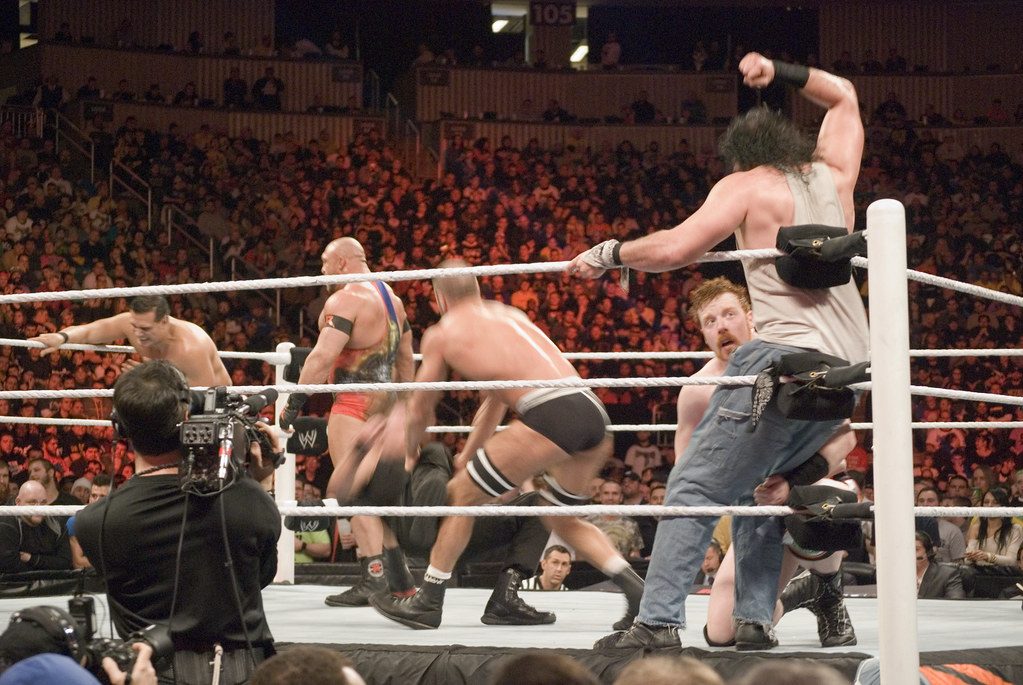
The Royal Rumble is built on a simple lie that everyone agrees to believe: that order can be imposed on chaos with a countdown clock.
Every ninety seconds (sometimes two minutes, depending on the year), the buzzer hits, a number flashes, and a new body enters the frame. The ring fills. Alliances form and dissolve in real time. Careers get resuscitated or quietly exposed. And the audience, trained by decades of repetition, reacts the way people react to fireworks: they know what’s coming, and it still works.
That’s the trick of the Royal Rumble. It’s a battle royal with structure. A demolition derby with a metronome. A match that turns time into a weapon.
The concept: one ring, timed entrances, over-the-top-rope elimination
At its core, the Royal Rumble is a battle royal where wrestlers enter at timed intervals. Eliminations happen when a wrestler is thrown over the top rope and both feet touch the floor. The last wrestler remaining wins.
That’s the skeleton. WWE hangs a lot of muscle on it:
- The “draw” (your entry number) becomes instant storytelling. Early numbers mean survival. Late numbers mean advantage. The match turns into a public math problem.
- The surprise entrance becomes a currency of its own: returns, debuts, legends, comedy spots, and the occasional “wrong guy at the wrong time” moment.
- The endurance story gives WWE a rare thing in modern wrestling: a match where stamina is the plot.
The Rumble is also unusually democratic in presentation. In a normal match, the camera tells you where to look. In the Rumble, the ring is crowded and the viewer becomes a scavenger, constantly scanning for who’s in trouble, who’s hiding, who’s waiting to strike.
How it was created: Pat Patterson’s idea, born in the late ’80s
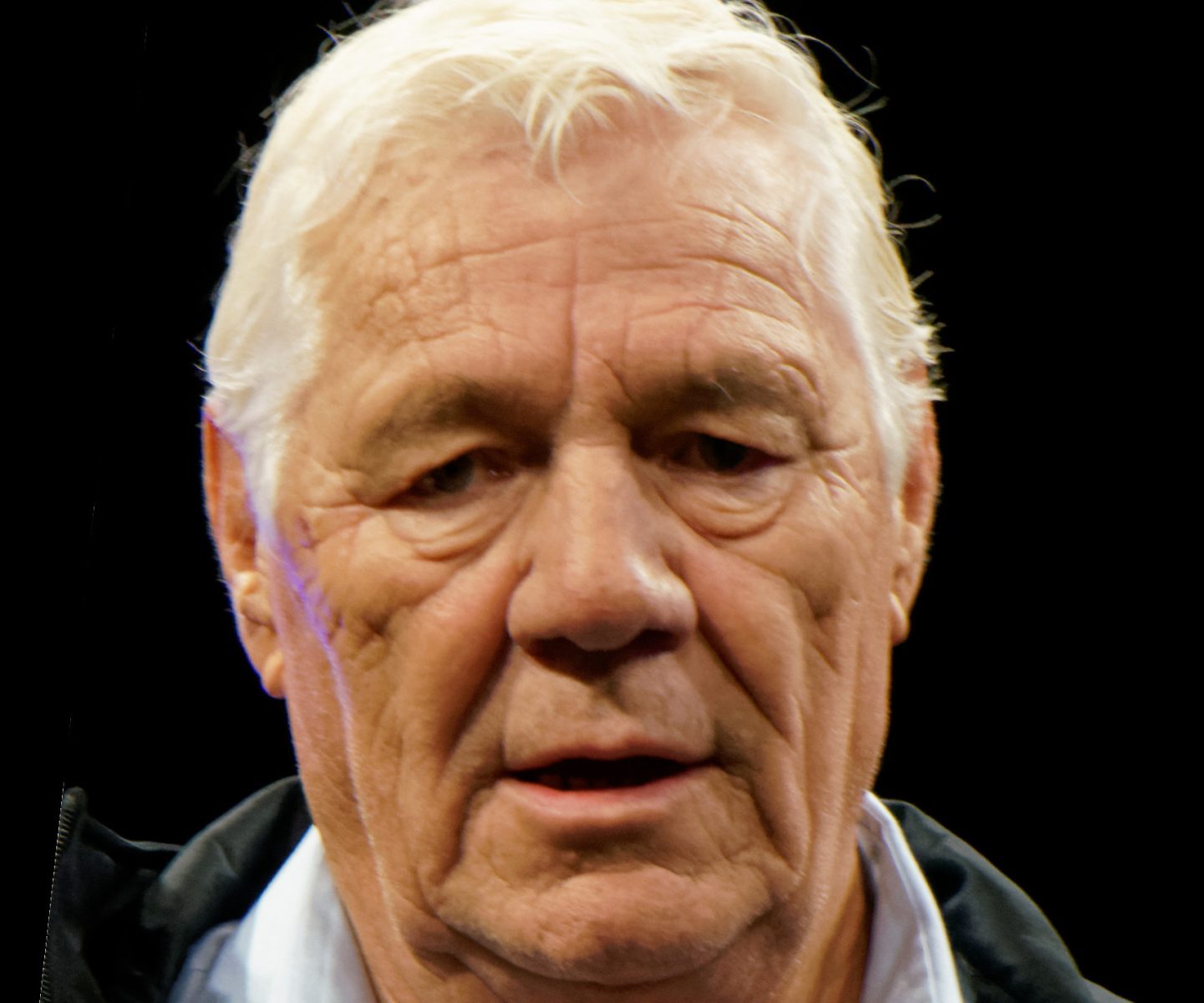
The Royal Rumble concept is widely credited to Pat Patterson, one of WWE’s most influential behind-the-scenes minds. WWE introduced the match in 1988, initially as a television special. It was a fresh format at a time when WWE understood something crucial about wrestling on TV: the audience doesn’t only pay for athletic outcomes. They pay for moments.
The Rumble was engineered to manufacture moments on schedule.
A standard battle royal can feel like a traffic jam. Patterson’s twist was the interval entrance system, which solved pacing and created a built-in suspense mechanism. You didn’t need a title on the line to keep people watching. You needed the clock.
Why it was created: a star-making machine and a winter tentpole
WWE didn’t create the Royal Rumble because wrestling lacked chaos. Wrestling has always had chaos. WWE created it because chaos, by itself, doesn’t reliably sell.
The Rumble does three business-critical things at once:
- It creates a yearly “event” without needing a single feud to carry it.
Feuds can get cold. Injuries happen. Plans change. The Rumble survives all of it because the format is the attraction.
- It turns the roster into a living billboard.
In one match, WWE can showcase a huge portion of its talent. Even a short appearance can matter if it’s framed right.
- It produces a clean, marketable winner.
Battle royals can feel random. The Rumble feels earned because it’s long, it’s structured, and it’s framed as a test of survival.
Over time, WWE also used the Rumble as a bridge: a way to point the company toward WrestleMania season with a single, unmistakable arrow.
How it changed over the years: from novelty to the road to WrestleMania
The Royal Rumble didn’t stay a gimmick match. It became an institution, and institutions always evolve.
1) The stakes hardened into a WrestleMania contract
The biggest shift in the Rumble’s history is what the win means. The match evolved from a spectacle into a WrestleMania main-event pipeline, with the winner earning a championship match at WrestleMania. That change turned the Rumble from “fun chaos” into “career architecture.”
Once that happened, the match stopped being a sideshow and became a cornerstone.
2) The roster size and pacing became part of the identity
The Rumble standardized around 30 entrants, and the entrance interval became a dial WWE could turn depending on the story they wanted: faster for frenzy, slower for endurance epics. The match length, the number of bodies in the ring at once, and the timing between entrances all became tools, not just rules.
3) Strategy became text, not subtext
Early on, the Rumble’s strategy was obvious but rarely emphasized: conserve energy, pick your spots, avoid the ropes. Over the years, WWE leaned into the chess match:
- Wrestlers forming temporary alliances.
- People “hiding” to survive.
- Targeting exhausted opponents.
- The moral question at the center of it all: is survival admirable, or cowardly?
The Rumble rewards both, depending on who WWE wants you to cheer.
4) The women’s Royal Rumble changed the landscape
A major modern evolution: WWE introduced a Women’s Royal Rumble, giving the format equal footing as a marquee attraction. It did what the men’s match has always done at its best: it created instant stars, delivered returns and debuts with maximum impact, and provided a clear seasonal destination.
It also forced WWE to do something the company sometimes resists: treat the women’s division as deep enough to sustain a match built on depth.
5) Production and “surprise” became a genre
As WWE’s presentation grew slicker, the Rumble became a showcase for production: countdown graphics, entrance staging, camera cuts designed to catch the first facial reaction when a theme hits.
And the surprise entrant became its own kind of storytelling. Sometimes it’s meaningful. Sometimes it’s nostalgia. Sometimes it’s a pop designed to cover a thin middle stretch. The Rumble can handle all three, which is part of why WWE keeps leaning on it.
6) The Rumble became a mirror of WWE’s current philosophy
In some years, the Rumble is about elevating the future. In others, it’s about re-centering the past. Sometimes it’s about stability. Sometimes it’s about shock. The format is flexible enough to carry any of those agendas, which makes it valuable, and also makes it revealing.
If you want to know what WWE thinks it is in a given era, watch who they protect in the Rumble, who they sacrifice, and who they position as inevitable.
Why it still works
Wrestling is a medium that lives and dies on anticipation. The Royal Rumble industrializes anticipation. It turns suspense into a repeating unit: 10, 9, 8…
The match also offers something modern wrestling often struggles to provide: a shared experience that’s easy to understand. You don’t need months of backstory to get it. Stay in the ring. Don’t go over the top rope. Outlast everyone.
And yet, for all its simplicity, it keeps producing new variations of the same human drama: panic, opportunism, exhaustion, luck, and the thin line between being clever and being exposed.
The Royal Rumble was created to be a spectacle that could survive any booking climate. It succeeded. It changed, it expanded, it professionalized its stakes, and it learned how to turn a countdown into a yearly ritual.
The clock hits zero. The music blares. And for a moment, the whole business feels honest about what it really sells: the feeling that anything can happen, delivered right on schedule.
Leave a Comment