
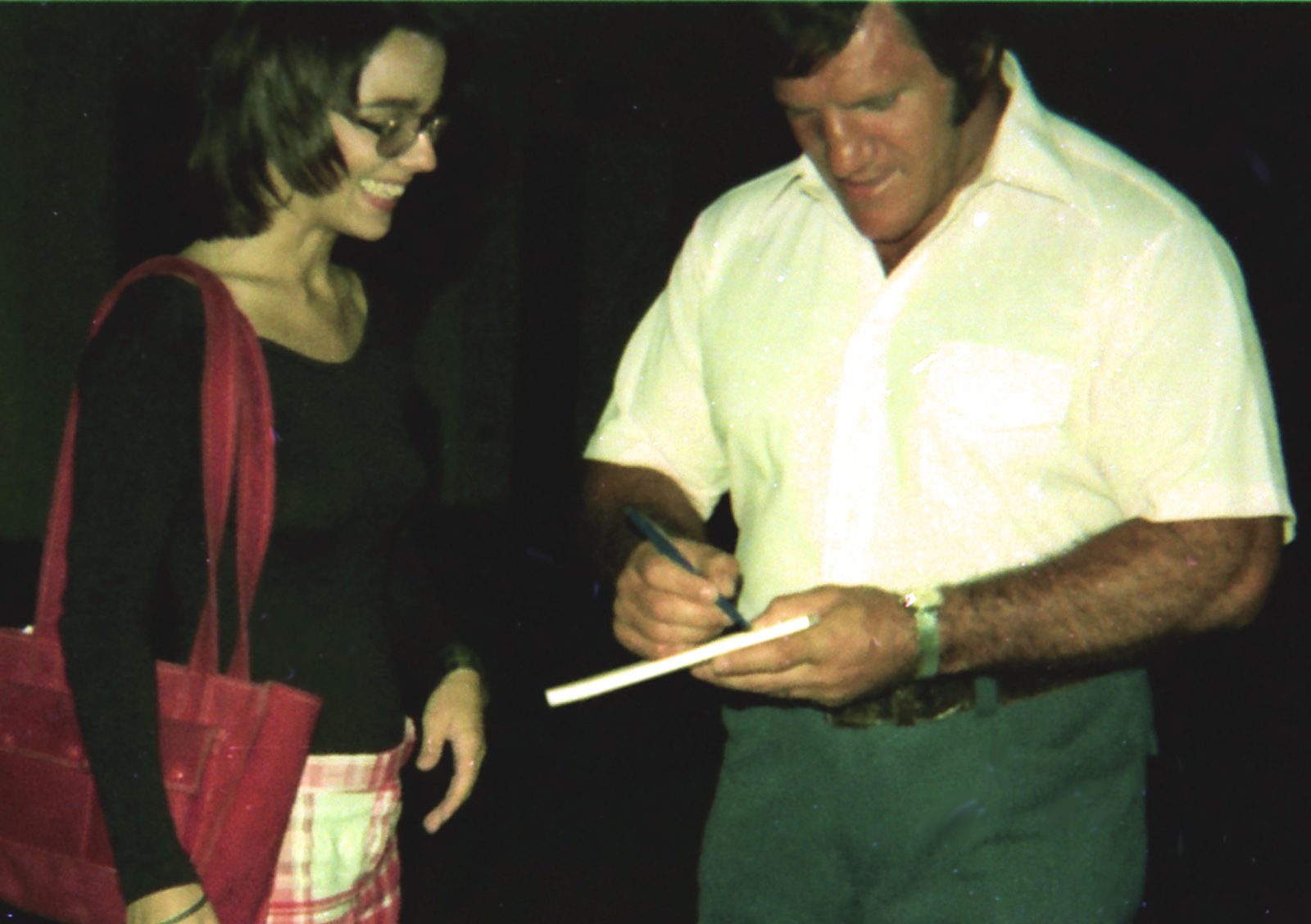
Bruno Sammartino, 1935–2018
He didn’t look like a man built for spectacle. That was part of the trick. Bruno Sammartino carried himself with the plain gravity of someone who’d already lived through the kind of fear you can’t kayfabe, and then he walked into pro wrestling’s loudest rooms and made them believe in something simple: strength that didn’t need a wink.
Ring Names:
- Bruno Sammartino
For a long stretch of the 1960s and 1970s, when the World Wide Wrestling Federation was still a regional empire and Madison Square Garden was its altar, Sammartino was the champion people treated like a civic institution. Not a flash. Not a meme. A constant. The kind of star whose drawing power didn’t depend on novelty because it depended on trust.
Sammartino was born October 6, 1935, in Pizzoferrato, Italy, and died April 18, 2018. His story is inseparable from immigration and war. As a child during World War II, he survived the Nazi occupation in Italy, an experience he later spoke about as formative. After the war, he emigrated to the United States and grew up in Pittsburgh, Pennsylvania, where he developed into a standout strength athlete before wrestling took him.
Wrestling, at the time, was a business of territories and gate receipts. You didn’t get pushed because you were “content.” You got pushed because people paid to see you, again and again, in the same buildings, against a rotating cast of villains. Sammartino became the rarest thing in that ecosystem: a champion who could anchor the whole operation.
His defining achievement is still almost absurd in its scale. Sammartino held the WWWF World Heavyweight Championship twice, including a first reign that lasted more than seven years (1963–1971), followed by a second reign that ran 1973–1977. Those reigns remain among the longest world-title runs in major professional wrestling history. In an era when the champion was the business plan, Sammartino was the plan.
The style matched the image. Sammartino wrestled like a working man with a temper he kept on a short leash: heavy forearms, punishing slams, and a sense that the fight mattered. His signature finish, the bearhug, wasn’t flashy. It was intimate and humiliating, a slow squeeze that turned a boastful heel into a man running out of air.
And then there’s the Garden. Sammartino’s name is welded to Madison Square Garden sellouts in the 1960s and 1970s, when the building functioned as a weekly referendum on who mattered in New York. He wasn’t presented as a superhero. He was presented as a standard. The immigrant strongman who looked like he could carry a neighborhood on his back, and sometimes did.
If you want the clearest measure of his cultural position, look at what happened later: the business changed, the presentation got louder, and Sammartino became one of wrestling’s most prominent internal skeptics. He publicly criticized the industry’s drift toward steroid use and what he saw as a loss of athletic credibility. For years, he kept his distance from WWE and its version of history, a refusal that mattered because it’s hard to sell a clean lineage when one of your foundational champions won’t sign the family photo.
That standoff eventually thawed. Sammartino was inducted into the WWE Hall of Fame in 2013, a reconciliation that felt less like a victory lap and more like a late acknowledgment that the company’s modern identity still sits on the shoulders of its territorial giants.
He died in 2018 at 82. By then, wrestling had become a global content machine, engineered for constant motion. Sammartino’s legacy sits in contrast to that: a reminder that the most powerful thing a performer can be is believable, and that “believable” sometimes looks like a man who doesn’t seem to be performing at all.
Leave a Comment